
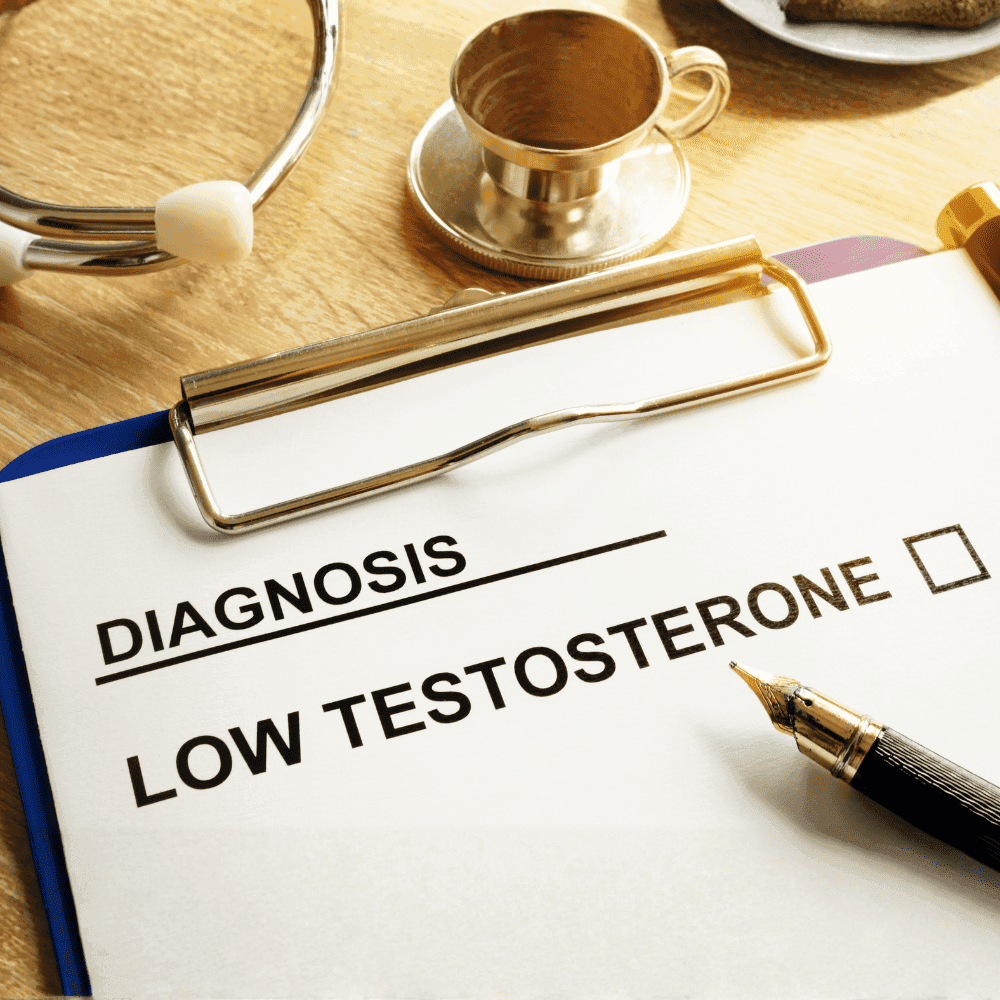
Low Testosterone in Men: Symptoms and Where to Test in DFW
Always Tired, Lacking Energy and Motivation? Low Testosterone Symptoms in Men — And There Is a Solution in DFW
Low testosterone symptoms in men
It's not just age. It's not just stress. Sometimes it is something measured with a simple blood test — and once identified, it can be treated.
Low Testosterone Symptoms in Men — When the Body Gives Warning Signs We Ignore
There is a repeating pattern: a man comes into the clinic stating he feels exhausted all the time. That he doesn't have the same energy as before. That he has noticed changes in his sex drive. That concentrating has become harder. That he has gained weight without changing his routine.
The automatic reaction is usually: "It's work," "It's stress," "I'm getting older," or "That's how I get when I don't sleep well."
Sometimes that's true. But other times — more frequently than expected — what is happening has a specific name: low testosterone.
Low testosterone symptoms in men
What Is Testosterone?
Testosterone is the primary male hormone. It is responsible for energy, libido, muscle mass, mood, bone density, and several key metabolic processes. Levels peak during youth and begin to decline naturally starting around age 30 — but in some men, this decline is much steeper than normal.
Low Testosterone Symptoms in Men — Described in Real Terms Men Use
Symptoms of low testosterone vary and can easily be confused with other conditions. But when several appear at the same time, the signal becomes clear:
Extreme fatigue without apparent reason — "I wake up tired even after sleeping"
Loss of libido — sex drive drops significantly
Difficulty achieving or maintaining an erection (erectile dysfunction)
Loss of muscle mass — the body loses tone despite exercise
Increased abdominal fat — especially around the belly
Irritability, mood swings, or unexplainable sadness
Difficulty concentrating — brain fog or feeling mentally slow
Loss of body or facial hair
Feelings of depression or general lack of motivation
You don't need every symptom to take action — noticing a distinct change is enough. If your body isn't responding as it used to for weeks or months, it's worth getting checked.
At Clínica Dr. Hispano, we prioritize your well-being with tailored care and experienced professionals. Contact us today and visit our clinic.
What Is the Normal Range for Testosterone?
The normal range for testosterone in adult men is 300 to 1,000 nanograms per deciliter (ng/dL). Levels below 300 ng/dL are clinically considered low testosterone.
However, numbers alone don't tell the whole story. A man with a reading of 310 ng/dL might feel unwell, while another with the exact same level experiences no symptoms. That is why our doctors evaluate your symptoms alongside laboratory results, rather than looking at numbers in isolation.
Real Clinical Case (Anonymous):
A young patient — age 25 — walked into our clinic asking for a routine general checkup. He didn't mention any sexual health issues. During the routine exam, the doctor decided to include a hormone panel. The result: testosterone at 140 ng/dL — far below the normal minimum.
When asked directly, the patient admitted he had been living with severe erectile dysfunction for over a year, and his relationship was in crisis because of it. He also had undiagnosed diabetes. It was a complex issue with a clear solution — but the first step was identifying that lab value.
The Connection Between Low Testosterone, Diabetes, and Body Weight
These three conditions interact closely:
Diabetes and Testosterone:
Men with type 2 diabetes, especially those who are overweight, have a higher likelihood of experiencing low testosterone. In turn, low testosterone makes blood sugar management more difficult, creating a continuous cycle.
Abdominal Fat and Testosterone:
Belly fat produces an enzyme that converts testosterone into estrogen (the female hormone). More abdominal fat leads to less available testosterone. That is why many overweight men experience low testosterone symptoms even at a young age.
Stress and Testosterone:
Chronic stress elevates cortisol levels — and cortisol suppresses natural testosterone production. A high-pressure job, lack of sleep, and constant stress can cause testosterone levels to drop significantly over time.
Want to monitor your body's health? Get tested today to ensure everything is in check.
At Clínica Dr. Hispano, we provide professional lab testing and complete guidance for any findings.
Low testosterone symptoms in men
What NOT to Do: The Most Common Mistake
When a man suspects low testosterone, his first reaction is often searching online for supplements: testosterone "boosters," natural pills, or specialized powders.
The main issue is that the vast majority of these supplements lack solid clinical backing. Some may even negatively affect natural hormone production or mask underlying medical conditions.
The Golden Rule:
Before taking any supplement or medication for testosterone, get tested first. Only a real hormone panel can reveal your exact levels, whether they are actually low, and what is causing it. From there, a doctor can prescribe proper care — ranging from lifestyle adjustments to supervised hormone therapy.
If you want to start a treatment plan, it is best done under expert guidance. Contact us today to regain your confidence and health.
How Low Testosterone Is Diagnosed at Clínica Dr. Hispano
The process is straightforward and completed in a single visit:
Step 1. Doctor Consultation — evaluation of symptoms, medical history, and risk factors
Step 2. Fasting Blood Test — measuring total testosterone levels
Step 3. Additional Testing — if levels are low, free testosterone, LH, FSH, and prolactin may be checked to identify the cause
Step 4. Results & Review — the doctor walks you through your results and explains diagnostic findings and options
Our complete male hormone panel covers testosterone and related hormones in a single visit, without requiring a trip to an outside laboratory.
Myths About Low Testosterone You Should Know
Myth: "It only happens to men over 50"
False. Low testosterone can occur at 25, 35, or any age. Factors like diabetes, excess weight, stress, and certain medications can lower hormone levels regardless of age.
Myth: "If I have low testosterone, nothing can be done"
False. Low testosterone is treatable. Depending on the underlying cause and severity, doctors may recommend lifestyle changes, medication adjustments, or supervised hormone replacement therapy.
Myth: "Gym supplements will boost my levels"
Not necessarily. Most over-the-counter supplements lack clinical proof of efficacy. While some ingredients might offer modest effects, nothing replaces an accurate medical diagnosis and proper treatment.
Why Choose Clínica Dr. Hispano in DFW?
Experienced male doctors specializing in men's health — speaking your language in every sense
9 DFW locations — Fort Worth, Dallas, Garland, Mesquite, Haltom City, Bedford, and more
Walk-in care without health insurance required
On-site comprehensive male hormone panels
Confidential consultations — absolute privacy guaranteed
Comprehensive medical care: if associated diabetes or high blood pressure is detected, everything is managed under one roof
Your energy can return. Your vitality can return.
Get your male hormone panel at Clínica Dr. Hispano — DFW
No Appointment Needed | Uninsured Welcome | 100% in Spanish | Fast Results
9 Locations Across Dallas–Fort Worth | Open 7 Days a Week